
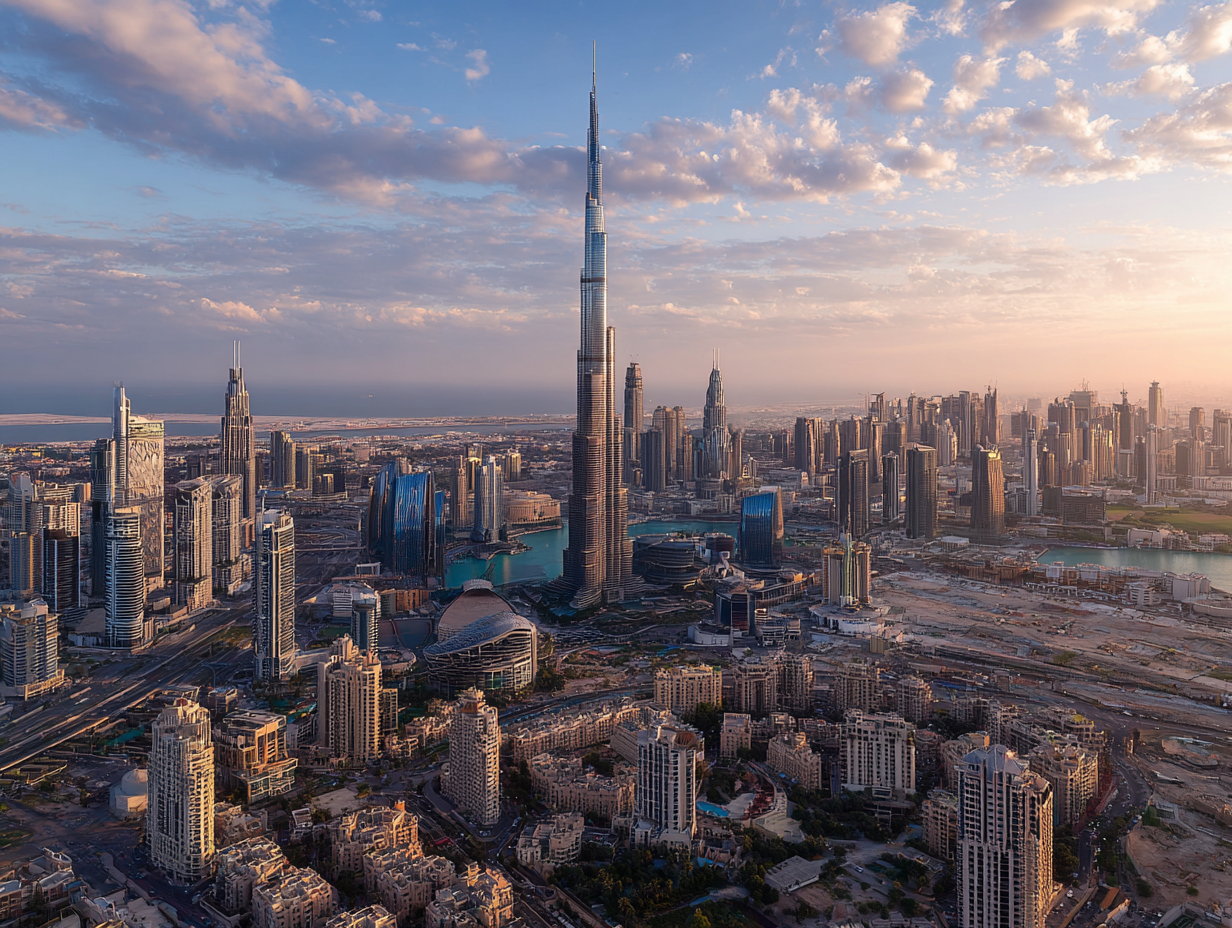
From my perspective, Dubai demonstrates that when regulation, incentives and execution are aligned, real estate becomes not just an asset class, but a scalable economic engine. I believe the city’s real estate boom is the result of state policy and a unique economic model. For leaders in U.S. real estate, Dubai’s approach has much to teach in the areas of regulation, construction speed and luxury.
The U.S. still has the capital, talent and demand, but I believe without structural reform, that capital might increasingly seek more efficient markets abroad. The contrast becomes clear when comparing how each market handles everything from regulatory oversight to investor protections.
Understanding Differences Between The U.S. And Dubai Markets
The Dubai real estate market is experiencing significant growth. Knight Frank said there was a record 169,000 property transactions in 2024, totaling 367 billion dirhams. Overall, real estate transaction values in Dubai increased by 20% in 2024, Forbes Middle East reported. And in April 2025, according to Property Monitor data, year-to-date sales transaction volumes exceeded 63,000, a more than 30% increase compared to the same time in 2024.
Behind these numbers lies a system engineered to minimize delays and maximize developer accountability.
Regulations
Dubai’s economic model is structured in such a way that it is disadvantageous for a developer not to complete a project on time. According to Decree No. 33 of 2020, a Special Tribunal has the right to settle disputes when real estate projects are unfinished or cancelled, including reassigning the project to another developer and refunding money in escrow accounts.
Law No. 8 of 2007 also outlined investor protection mechanisms pertaining to escrow account requirements for developers. Similarly, in the U.S., a buyer’s escrow account system can provide protection. Money is transferred to the seller only after the buyer confirms that the terms of the contract have been fulfilled.
For large state-owned developers in Dubai, reputational risks are as high as financial ones. In my experience, industry leaders value their reputation and strive to complete projects on time, or even earlier, because time is money.
Dubai’s real estate market is overseen by the Dubai Land Department and its regulatory arm, the Real Estate Regulatory Agency. The American system doesn’t have a single regulator. At the federal level, developers must comply with various regulations, such as the Fair Housing Act, the Clean Water Act and potentially even securities requirements from the Securities and Exchange Commission (depending on how they raised capital). Further control over the real estate sector is decentralized among the states, each of which has its own requirements. This fragmentation can present challenges and possibly construction delays.
The Luxury Segment
Dubai’s luxury real estate sector has been showing strong performance and demand for properties priced over $10 million. “Values have risen 70% since the end of 2019,” according to Bloomberg (paywall).
In the U.S., the luxury segment is also well-developed, though prices have “continued to soften.” Maintaining a large luxury property in the U.S. can be expensive, however. Some estimates put the average annual cost of maintaining a property in the U.S. at about 5% of the property’s value. That means the cost of maintaining a $3 million property could be around $150,000 per year. Some investors may find maintenance costs lower in Dubai, though luxury developments may still have service charges to cover maintenance and other amenities, which can vary depending on location.
Digitalization
The Dubai Land Department and the company Prypco Mint have launched a joint project for real estate tokenization. The idea is to enable fractional ownership of a property. Investors can purchase blockchain-based tokens, and a property could potentially be sold at a higher total valuation by dividing the shares and attracting smaller investors. The investors buying the tokens expect the share to increase in value over time, at which point the token may be sold at a profit.
The first property listed on the platform, a two-bedroom apartment, was fully funded within a day. The project attracted 224 investors, with an average investment of 10,714 dirhams.
In the U.S., I believe a similar format could stimulate the secondary market and attract millennial investors. However, real estate tokenization remains a niche market.
Residency
The U.S. does not grant residency for purchasing expensive real estate. Dubai, on the other hand, offers a 10-year residency permit through the Golden Visa program. The UAE Golden Visa may be obtained by real estate investors with properties worth 2 million dirhams (approximately $550,000 at the time of this writing).
What U.S. Real Estate Leaders Can Learn
For U.S. real estate leaders, the lesson from Dubai is not about copying its architecture or luxury branding—it is about redesigning the system itself. Developers can strive to shift toward faster execution cycles and stricter capital discipline. Investors should choose markets with clear escrow and enforceable timelines. Lenders and private credit funds see that predictability, not leverage, often drives better risk-adjusted returns.
It’s also worth noting that the Gulf Cooperation Council markets still have structural gaps in institutional private credit. The lack of standardized, transparent private financing solutions for end-buyers and mid-scale developers is a challenge. This is precisely where the U.S. market offers a valuable lesson as well: A mature private capital ecosystem can help fill the space between banks and equity.
The question now for U.S. real estate leaders isn’t whether to learn from Dubai’s model. It’s whether they’ll adapt quickly enough to remain competitive in an increasingly global market.