
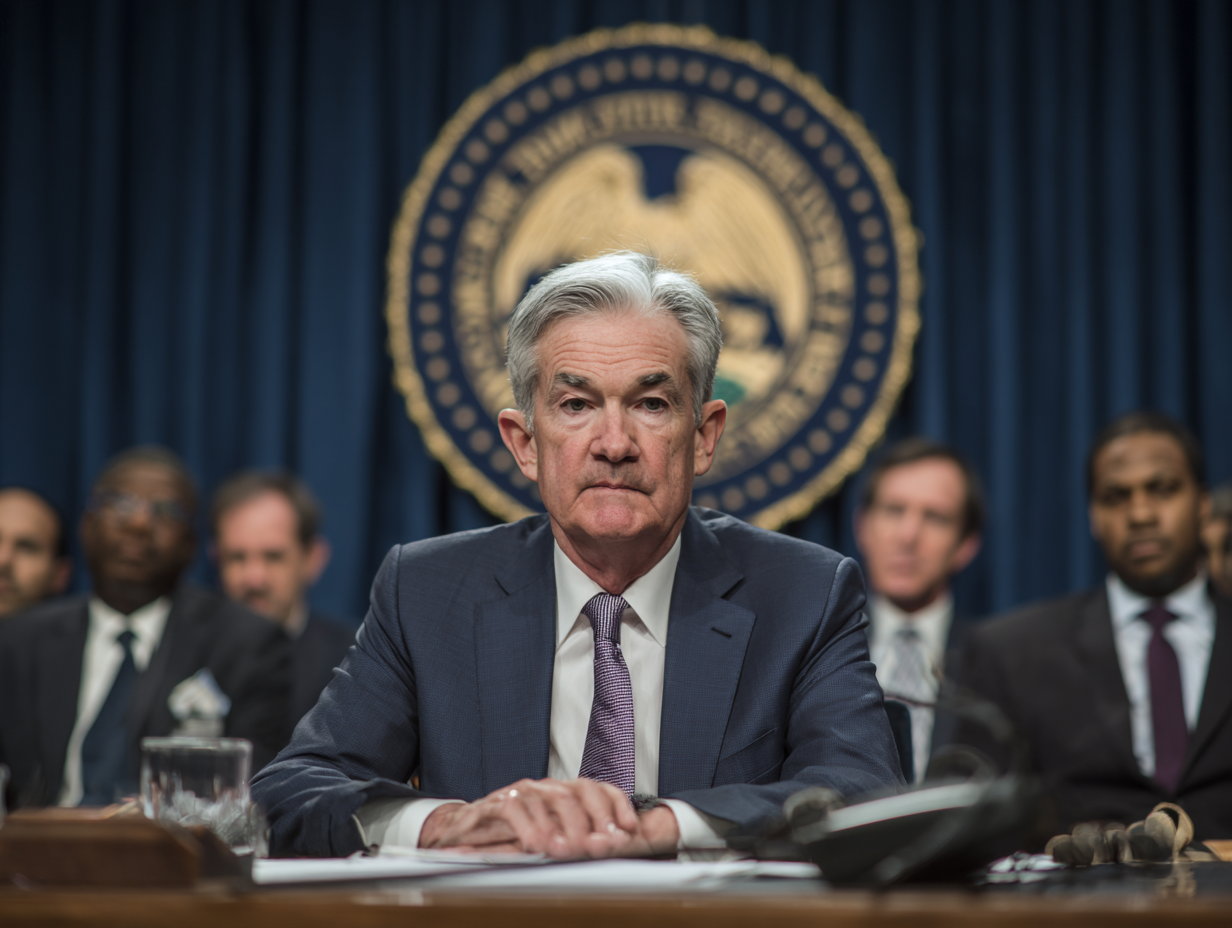
The US Federal Reserve has kept interest rates unchanged at 3.50–3.75 per cent, citing renewed inflation risks driven by rising oil prices and geopolitical tensions.
The US Federal Reserve kept interest rates unchanged on Wednesday, holding its benchmark policy rate in the 3.50 to 3.75 per cent range as it grapples with renewed inflation pressures driven by surging oil prices and geopolitical tensions.
The move was widely expected, but discussions around the decision reflected growing concern inside the Fed that inflation risks may not be fading as quickly as hoped.
“Developments in West Asia are contributing to a high level of uncertainty about the economic outlook,” the Fed said in a statement, adding that inflation is “elevated” in part due to the surge in energy prices.
The Fed added that while the unemployment rate has changed little in recent months, job gains remain low.
Fed policymakers are increasingly focused on the impact of surging oil prices driven by the Iran war. The continued closure of the strategic Strait of Hormuz has pushed Brent crude back above 110 dollars per barrel, compared with around 70 dollars before the escalation in February.
This has complicated the Fed’s inflation outlook, which is already under pressure.
Inflation in the US remains about one percentage point above the Fed’s 2 per cent target. The central bank also expects upcoming inflation data to show further upward pressure, adding to the challenge of bringing price growth under control.
Against this backdrop, the US economy continues to show resilience.
Job growth has remained surprisingly firm, and unemployment has eased to around 4.3 per cent. That resilience reduces pressure on the Fed to cut rates in the near term.
However, economists say the combination of sticky inflation and strong employment is pushing the central bank toward a more cautious stance.
Markets are now pricing in a prolonged period of higher interest rates, with traders seeing little chance of cuts before mid-next year.
The decision also comes at a politically sensitive moment for the US central bank, with Jerome Powell nearing the end of his term as Fed chair on May 15.